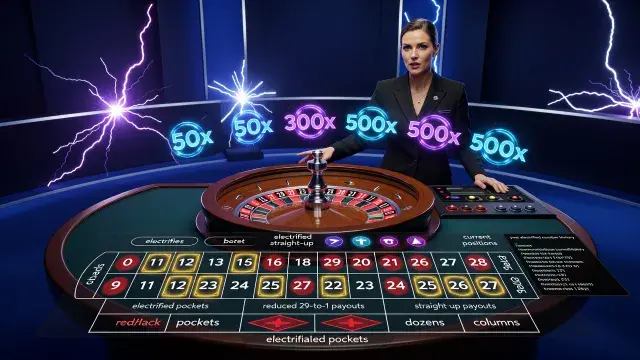
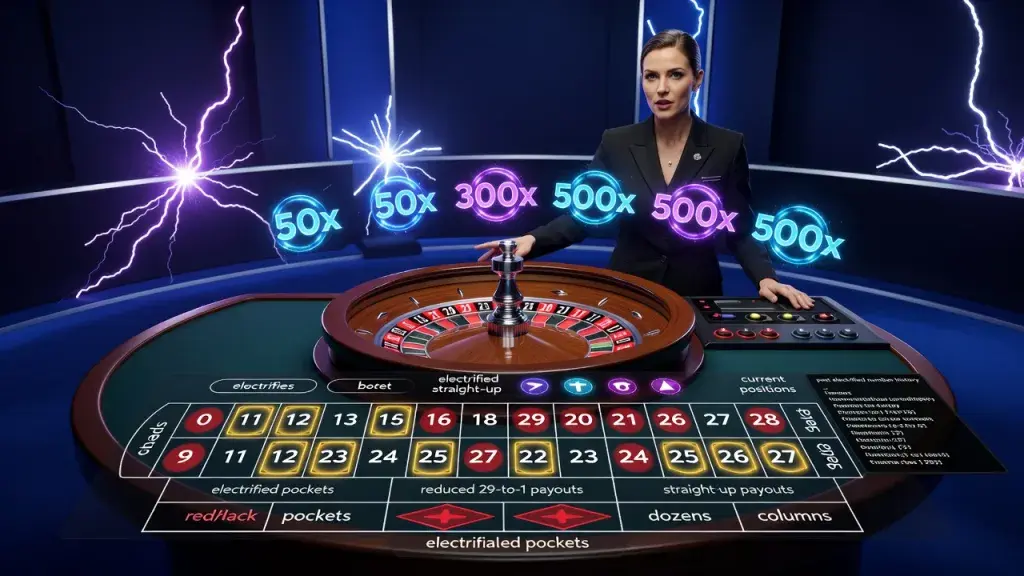
A single straight-up number bet on standard roulette pays 35 to 1. On Lightning Roulette, that same bet can pay up to 500 to 1. That gap between conventional payouts and electrified multipliers is the entire reason this game has become one of the most talked-about titles in live dealer casinos. It is not roulette with a gimmick bolted on - it is a fundamentally different risk profile wearing a familiar wheel.
Players who approach it expecting the mathematics of European roulette are often surprised by how differently the numbers behave once random multipliers enter the picture. Before every spin, the game's random number generator strikes between one and five numbers on the board with multipliers ranging from 50x to 500x, and if the ball lands on one of those numbers with a straight-up bet placed on it, the payout detonates accordingly. Anyone researching how to play smart will eventually land on a detailed breakdown like the one found on this site, which walks through the mechanics in more granular detail than most casino lobbies bother to explain. Understanding that mechanic is the starting point for any lightning roulette strategy worth following, because it changes which bets make sense and which ones quietly bleed a bankroll dry.
This piece breaks down the rules, the odds, the house edge nuances, and the realistic tactics that separate disciplined players from those chasing multipliers on impulse.
What Makes Lightning Roulette Different From Standard Roulette
Lightning Roulette runs on a European single-zero wheel, meaning the base game already carries the lower house edge associated with 37 pockets rather than 38. But the "lightning" element is what changes everything downstream. Before each round, the game's RNG system electrifies between one and five numbers with random multipliers. These multipliers apply exclusively to straight-up bets - betting on a single number - and they can transform a modest wager into a five-figure payout in seconds.
The Role of the RNG-Generated Multipliers
The multiplier selection happens independently of the physical wheel spin. A studio-based random number generator picks the electrified numbers and their respective multiplier values before the dealer spins, and this selection is visually displayed on screen so players can decide whether to chase those numbers or stick with safer bets. This separation between the RNG and the physical wheel is what makes the extreme lightning roulette game format legally distinct from a fixed-odds table - the multiplier layer is a separate, provably randomized system layered on top of a traditional wheel.
Why the House Edge Shifts With Straight-Up Bets
Standard European roulette carries a house edge around 2.7% across all bet types. Lightning Roulette's outside and inside bets other than straight-up numbers retain a similar structure, but the straight-up bets carry a materially different edge because of a payout adjustment: non-electrified straight-up numbers pay only 29 to 1 instead of the usual 35 to 1. That reduction funds the massive multiplier payouts on electrified numbers. It is a trade-off, not a bonus - the game recoups value elsewhere to pay for the spectacle.
Live Dealer Presentation and Studio Design
Live lightning roulette is broadcast from a dedicated studio with cinematic lighting, sound design timed to multiplier reveals, and a dealer who narrates the electrification sequence before spinning. The presentation is deliberately theatrical, which matters because it shapes player psychology - the buildup before each multiplier reveal is engineered to heighten anticipation, and recognizing that design intent helps players stay rational rather than swept up in the moment.
Lightning Roulette Betting Rules Explained
The betting structure mirrors classic roulette in most respects, but a few rules are specific to this variant and directly affect strategy.
Standard Inside and Outside Bets
Players can place the usual range of bets: straight-up, split, street, corner, line, column, dozen, red/black, odd/even, and high/low. All of these behave exactly as they would on a traditional European wheel, with standard payouts and standard odds. The lightning multipliers do not touch these bets at all - they apply only to straight-up numbers.
The Reduced Payout on Non-Lucky Straight-Up Numbers
This is the rule most new players overlook. A straight-up bet on a number that is not struck by lightning still pays only 29 to 1, not the 35 to 1 seen in classic roulette. This adjustment is baked into every round, regardless of whether any of your chosen numbers get electrified.
Betting Time Windows and Round Pacing
Because the multiplier reveal adds an extra step before the wheel spins, rounds run slightly longer than standard live roulette. Betting windows typically last around 20 to 25 seconds, and the electrification sequence itself takes a few seconds to animate before the dealer calls "no more bets."
- Straight-up bets are the only ones affected by multipliers
- Multipliers range from 50x to 500x and are announced before the spin
- Non-electrified straight-up wins pay 29 to 1 instead of 35 to 1
- All other bet types follow standard European roulette rules
Lightning Roulette Odds and Payout Structure
Odds in this game exist on two levels: the underlying probability of any number hitting, and the payout multiplier attached to that number if it happens to be electrified. These are independent variables, and conflating them is where many players miscalculate their expected value.
Base Probability on a Single-Zero Wheel
With 37 numbers on the wheel, any single number carries a 1 in 37 chance of hitting on a given spin - roughly 2.7%. This probability does not change based on whether that number is electrified. The RNG multiplier selection and the physical spin outcome are statistically independent events.
How Multiplier Size Affects Expected Value
A 500x multiplier on a struck number transforms a $1 bet into $500, which is a payout ceiling far beyond anything classic roulette offers. But the frequency of top-tier multipliers is deliberately low; smaller multipliers like 50x and 100x appear more often than the rare 500x strike. Expected value calculations across thousands of rounds show the game's overall return to player sits close to standard European roulette once the reduced 29-to-1 payout is factored against the occasional windfall multiplier.
Comparing Lightning Roulette Odds to Classic Variants
Against American roulette, with its double-zero wheel and roughly 5.26% house edge, Lightning Roulette's structure is still favorable on non-straight bets. Against European roulette specifically, the comparison depends entirely on how often a player targets straight-up numbers versus outside bets, since that is where the payout mechanics diverge.
Lightning Roulette Strategy: What Actually Works
No betting system changes the underlying probability of a wheel, and anyone claiming otherwise is selling something. But structural choices around bet sizing, bet type, and bankroll allocation do meaningfully affect variance and session longevity.
Balancing Straight-Up Bets With Outside Bets
A common approach mixes a small number of straight-up bets, chasing the multiplier upside, with outside bets like red/black or dozens to stabilize the session. The outside bets absorb losses when the straight-up numbers miss, while the straight-up bets provide the occasional large payout that outside bets cannot match.
Bankroll Segmentation for High-Variance Play
Because straight-up bets carry high variance even before multipliers are considered, allocating a fixed, small percentage of total bankroll - often cited around 1 to 3% per spin - to those speculative bets keeps a losing streak from draining funds meant for longer, steadier sessions.
Reading Multiplier Patterns Without Overreacting
Some players track which numbers get electrified across sessions, looking for patterns. The RNG that selects electrified numbers is independent each round, so no historical pattern predicts future strikes. The value of tracking lies only in personal discipline - noting bet sizes and outcomes - not in predicting the next multiplier.
Session Limits and Loss Thresholds
Setting a hard stop-loss and a target win amount before starting a session prevents the emotional escalation that high multipliers can trigger. Watching another player's number get struck for 400x creates a strong urge to chase that outcome; a predetermined limit keeps that impulse in check.
How the Extreme Lightning Roulette Game Format Operates
Some studios offer an "extreme" or "xXxtreme" variant, which pushes the multiplier ceiling even higher and increases the number of electrified numbers per round compared to the standard version.
Increased Number of Electrified Slots
Where the standard game electrifies up to five numbers, the extreme version can strike a larger portion of the board, sometimes covering a significant cluster of numbers with multipliers in a single round. This changes the calculus for straight-up betting, since the odds of landing on an electrified number rise correspondingly.
Higher Multiplier Ceilings
The extreme format often extends the multiplier ceiling well beyond the standard 500x ceiling, creating payout potential that rewards patient, well-capitalized players willing to accept longer losing streaks between hits.
Studio Production Differences
Extreme variants typically feature more elaborate visual effects during the electrification sequence, longer betting windows to accommodate the added anticipation, and dealers trained specifically for the heightened pacing of the format.
Playing Lightning Roulette Live: What to Expect at the Table
The live format is what distinguishes this game from an RNG-only digital slot dressed up as roulette. A real dealer spins a physical wheel, streamed in real time, while the multiplier layer runs independently in the background.
Studio Streaming Quality and Dealer Interaction
High-definition multi-camera setups capture the wheel from several angles, including close-ups during the multiplier reveal. Dealers narrate the process, call out struck numbers, and maintain pacing that keeps rounds moving without rushing player decisions.
Mobile and Desktop Table Access
The interface displays the betting grid, current multiplier positions, and a running history of past electrified numbers, all synced in real time across devices. Bet placement on mobile mirrors the desktop layout closely enough that switching between them mid-session causes no confusion.
Table Limits and Session Availability
Minimum and maximum bet limits vary by operator, but the format is generally accessible to a wide range of bankrolls, with tables typically running continuously rather than on a scheduled basis, unlike some other themed live game shows.
Frequently Asked Questions
Is Lightning Roulette rigged because of the multipliers?
No. The multipliers come from a certified random number generator that operates independently of the physical wheel spin. Regulated operators submit these systems to third-party testing agencies, and the reduced payout on non-electrified straight-up bets is what funds the multiplier system rather than any manipulation of outcomes.
Can I only bet on electrified numbers once they're revealed?
No, betting closes before the electrification sequence appears in most formats, meaning you place your straight-up bets without knowing in advance which numbers will be struck. This is central to the game's design - it prevents players from betting exclusively on guaranteed multiplier numbers.
What's the realistic house edge compared to regular roulette?
On outside bets, the house edge closely matches standard European roulette, around 2.7%. On straight-up bets, the edge is higher due to the reduced 29-to-1 payout on non-electrified numbers, though this is offset over time by the occasional large multiplier hit.
Does the extreme version have better odds than standard Lightning Roulette?
Not necessarily better, but different. More electrified numbers per round increase the frequency of multiplier hits, while the higher ceiling increases potential payout size. The trade-off in variance and payout structure depends on the specific operator's version.
What's a reasonable bankroll for playing straight-up bets regularly?
Because straight-up bets are high variance even without multipliers, a bankroll large enough to absorb 30 to 50 consecutive losing spins on small stakes is a reasonable buffer for players who want to pursue multiplier hits without risking their entire session budget on a single unlucky stretch.
Do professional or advantage players have any edge in this game?
No verified advantage play method exists for Lightning Roulette, since both the wheel outcome and the multiplier selection rely on independently certified random systems. Strategy in this context refers to bankroll management and bet selection, not exploiting predictable patterns.