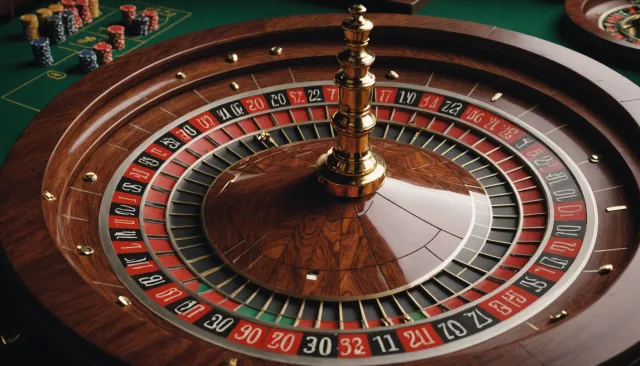

Zero sits at the bottom of every European roulette wheel, but it isn't just a number - it's the house's entire mathematical advantage packed into a single green pocket. Most players glance at a roulette table, see thirty-seven slots, and assume the numbers are arranged in some kind of ascending or descending order. They aren't. The physical layout of the wheel has nothing to do with numerical sequence, and understanding why reveals a lot about how the game actually works.
This matters more than casual players realize. The roulette wheel lowest number, zero, carries a weight far beyond its digit value - it's the mechanism that gives the casino its edge over every bet placed on red, black, odd, even, high, or low. Meanwhile, the placement of numbers around the wheel follows a deliberate pattern designed by wheel manufacturers centuries ago, not a simple counting order. Readers who want the full technical breakdown of how the highest and lowest values interact on the wheel can check a detailed explanation at lowest number on roulette wheel, which covers the physical and mathematical relationship between the two extremes.
What follows is a complete ranking of European roulette numbers from lowest to highest, an explanation of why the wheel is arranged the way it is, and a practical look at what these numbers mean for anyone placing real bets.
Understanding the European Roulette Wheel Layout
How Many Numbers Are on the Wheel
A European roulette wheel contains thirty-seven pockets, numbered zero through thirty-six. This single-zero format distinguishes it from the American version, which adds a second zero (00) and pushes the pocket count to thirty-eight. That extra pocket in the American wheel doesn't change the lowest number on roulette - zero remains zero in both formats - but it does dilute the odds for every other bet on the table.
Why the Wheel Isn't in Numerical Order
Spin a European wheel and you won't find 1 next to 2, or 10 next to 11. Instead, the sequence runs 0, 32, 15, 19, 4, 21, 2, 25, 17, 34, 6, and so on, alternating between red and black pockets with an intentional mix of high and low, odd and even values. This arrangement prevents players from predicting outcomes based on physical proximity and ensures that consecutive spins don't favor any particular section of numbers.
The Role of Color Distribution
Of the thirty-six non-zero numbers, eighteen are red and eighteen are black, alternating with near-perfect balance around the wheel. Zero stands apart in green, visually and functionally separate from the color-based betting options. This separation is exactly why the zero pocket produces the house edge on even-money bets like red/black or odd/even.
What Is the Lowest Number on the Roulette Wheel
Zero as the Definitive Lowest Value
There's no ambiguity here: zero is the smallest roulette number on a European wheel, sitting below one and functioning as neither odd nor even, neither red nor black. It occupies a single pocket, positioned at what's typically referred to as the top of the wheel in physical layout descriptions used by manufacturers and casino staff.
Why Zero Isn't Treated Like a Normal Number
Zero breaks every standard betting category. It's not part of the 1-18 or 19-36 ranges, it doesn't count toward the first, second, or third dozen, and it doesn't belong to either column in the standard betting layout. This exclusion is precisely what generates the casino's mathematical edge - when the ball lands on zero, outside bets on color, parity, or range all lose, regardless of what number a player might have predicted as "low."
Comparing Zero to American Roulette's Double-Zero
American wheels add 00 alongside 0, and this second zero is also treated as neither red nor black, neither odd nor even. The presence of two such pockets nearly doubles the house edge compared to the single-zero European format. This is one of the clearest, most quantifiable reasons experienced players favor European wheels whenever given the choice.
- European wheel: single zero, house edge near 2.7%
- American wheel: zero and double-zero, house edge near 5.26%
- Zero pockets in both formats are colored green and excluded from color-based bets
Complete Roulette Numbers Ranking: Lowest to Highest
The Full Numerical Sequence
Ranked purely by value rather than wheel position, European roulette numbers run in a straightforward ascending order from 0 to 36. This ranking has nothing to do with where the numbers physically sit on the wheel - it's simply the numerical hierarchy used for reference when discussing betting ranges, payout structures, and statistical groupings.
Low Numbers Versus High Numbers in Betting Terms
The betting layout splits non-zero numbers into two equal halves: 1 through 18 (low) and 19 through 36 (high). This binary split is a core even-money wager, paying out at 1:1 odds. Zero falls outside both categories, which means a bet on "low" loses if the ball lands on zero - a detail that surprises newer players who assume zero automatically counts as the lowest qualifying number for that wager.
Where Zero Fits in the Ranking
Despite being excluded from betting categories, zero remains the numerical floor of the entire European roulette wheel numbers lowest value in the sequence. Any discussion of roulette numbers ranking has to start there, since every other number - from 1 up through 36 - is defined relative to that baseline.
How Number Placement Affects Betting Strategy
Straight-Up Bets on Low Numbers
A straight-up bet on zero pays 35 to 1, identical to a straight-up bet on any other single number. Some players specifically target zero and its neighboring pockets on the wheel - 32 and 15 - because of a strategy called "betting the zero neighbors," which covers a small physical cluster rather than a numerical range.
Neighbor Bets and Physical Wheel Position
Because the wheel sequence isn't numerical, "neighbors" refers to physical adjacency, not numerical closeness. The numbers sitting next to zero on the actual wheel - 26 and 32 on one side, 15 on the other - are frequently grouped together in call bets common in French and European roulette variants, even though numerically they have nothing in common with zero.
Column and Dozen Bets Involving Low Numbers
The first dozen (1-12) and the first column both include the lowest non-zero numbers on the layout. These bets pay 2:1 and are popular among players who want moderate risk with better odds than a single-number wager. Zero, again, sits outside every dozen and column, reinforcing its unique status as the true roulette wheel lowest number with no categorical home.
Common Misconceptions About Low Numbers in Roulette
Zero Does Not Mean "Free" or "Safe"
Some newer players assume zero functions as a kind of neutral or safe outcome. It doesn't. If a player hasn't specifically bet on zero or a wager that includes it, landing on zero simply means a loss for nearly every other bet type on the table.
Low Numbers Aren't More or Less Likely to Hit
Each of the thirty-seven pockets carries identical odds on every spin - roughly 2.7% for any single number. There's no physical or mechanical reason for low numbers to appear more or less frequently than high numbers over a large sample of spins. Patterns players notice over short sessions are statistical noise, not evidence of bias.
The Wheel's Physical Layout Doesn't Match the Betting Table
The felt betting layout arranges numbers 1 through 36 in three neat columns with zero at the top, giving the visual impression of order. The wheel itself scrambles this sequence entirely. Confusing the two - assuming that numbers close together on the felt are also close together on the wheel - leads to flawed assumptions about probability and neighbor betting.
Frequently Asked Questions
What is the lowest number on a European roulette wheel?
Zero is the lowest number on a European roulette wheel. It sits outside the standard 1-36 range used for most betting categories and is colored green rather than red or black.
Is zero considered odd or even in roulette?
Zero is treated as neither odd nor even in roulette. Betting on odd or even loses if the ball lands on zero, which is one reason the pocket generates the house's statistical edge.
Does the American roulette wheel have the same lowest number?
Yes, zero remains the lowest number on American wheels as well, but the addition of a second pocket, 00, increases the total number of non-winning outcomes for outside bets and raises the house edge compared to the European version.
Why isn't the roulette wheel arranged in numerical order?
The wheel is arranged to balance color, odd/even distribution, and high/low values around its circumference, preventing predictable clustering. This design choice has nothing to do with a counting sequence and everything to do with fairness and unpredictability.
Does betting on "low numbers" include zero?
No. The standard low bet covers numbers 1 through 18 only. Zero is excluded from this category, along with the high bet, both dozens groupings, and all three columns.
Are low numbers riskier to bet on than high numbers?
Neither group carries more risk than the other. Each number, low or high, has an identical probability of appearing on any given spin, so the perceived risk difference is purely psychological rather than mathematical.